


What Are NEVs and BEVs? Understanding the Different Types of New Energy Vehicles
As the green transition continues to accelerate in the transportation industry, terms such as NEV, BEV, PHEV, and HEV are becoming increasingly common. However, not everyone clearly understands the differences between them. These new energy vehicles offer significant advantages in terms of efficiency, fuel savings, and environmentally friendly emissions performance. To help you choose the right vehicle for your operational needs and business objectives, VIMID explores the definitions of NEVs and BEVs and explains how to distinguish between today’s main types of green vehicles.
What Is an NEV?
NEV stands for New Energy Vehicle, a term referring to vehicles that use powertrains based entirely or primarily on alternative energy sources rather than conventional internal combustion engines.
According to the classification used by China’s Ministry of Industry and Information Technology (MIIT), NEVs include three main categories: Battery Electric Vehicles (BEVs), plug-in hybrid electric vehicles (PHEVs, including REEVs), and Fuel Cell Electric Vehicles (FCEVs).
In common NEV classification diagrams, Extended-Range Electric Vehicles (EREVs/REEVs) are generally categorized as plug-in hybrid vehicles.
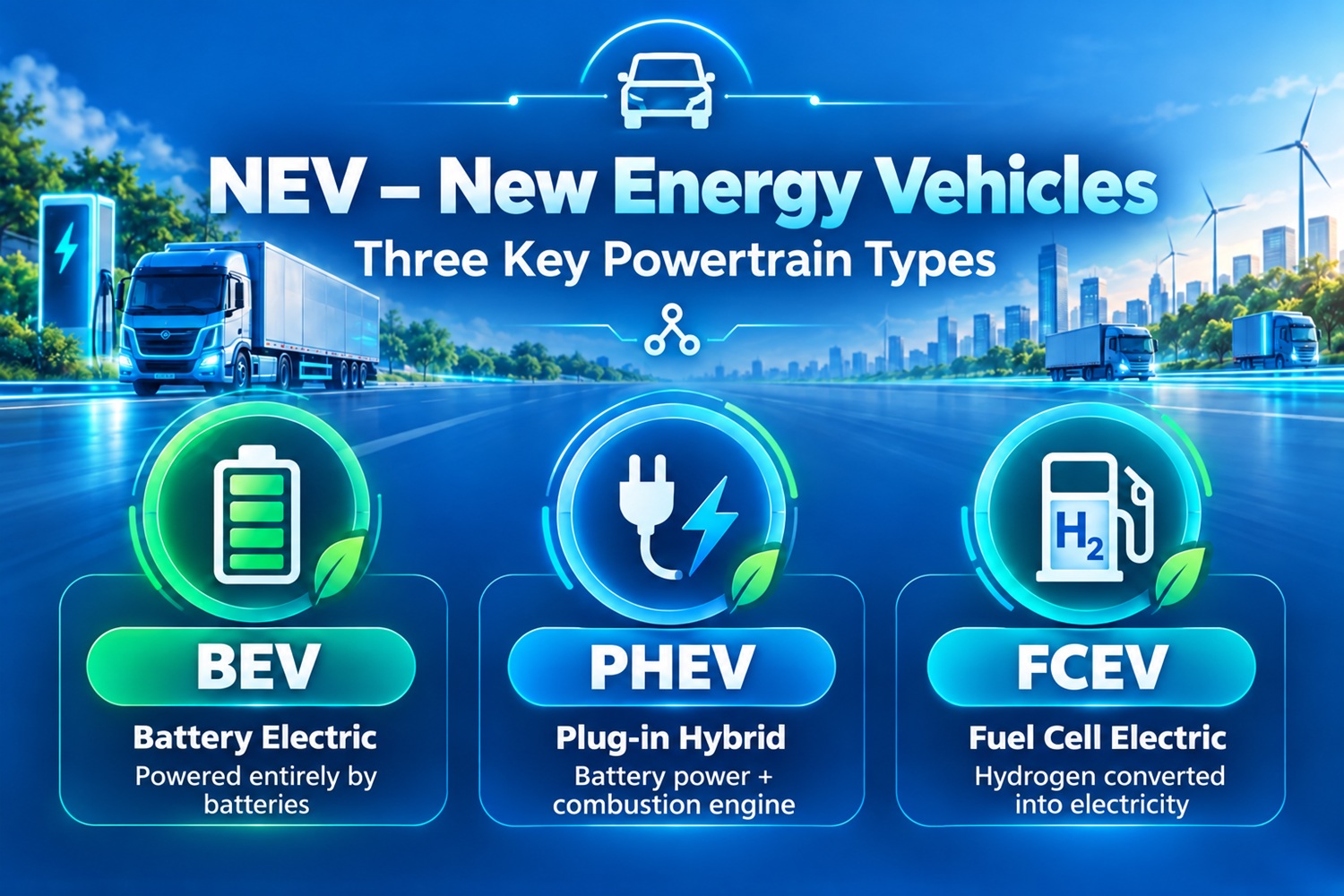
The common characteristic of NEVs is their use of electric propulsion technology to reduce dependence on fossil fuels, improve energy efficiency, and limit emissions during operation.
What Is a BEV?
BEV stands for Battery Electric Vehicle. It is a fully electric vehicle that relies entirely on electricity stored in a battery pack to power its electric motor, without an internal combustion engine providing traction. Unlike hybrid vehicles, BEVs do not use gasoline or diesel during operation. The battery is charged from an external power source and can also recover some energy through regenerative braking.
A BEV typically consists of the following main components:
- Traction battery pack: Stores electrical energy to power the drivetrain.
- Electric motor: Converts electrical energy into mechanical energy to drive the wheels.
- Power controller: Regulates electrical current and motor operation.
- Battery Management System (BMS): Monitors battery voltage, temperature, and condition.
- Charging system: Receives electrical energy from a charging station or compatible charging equipment.
BEVs produce no direct exhaust emissions during operation. However, their total lifecycle emissions still depend on the electricity source, battery manufacturing processes, and other related factors.
How Does a BEV Work?
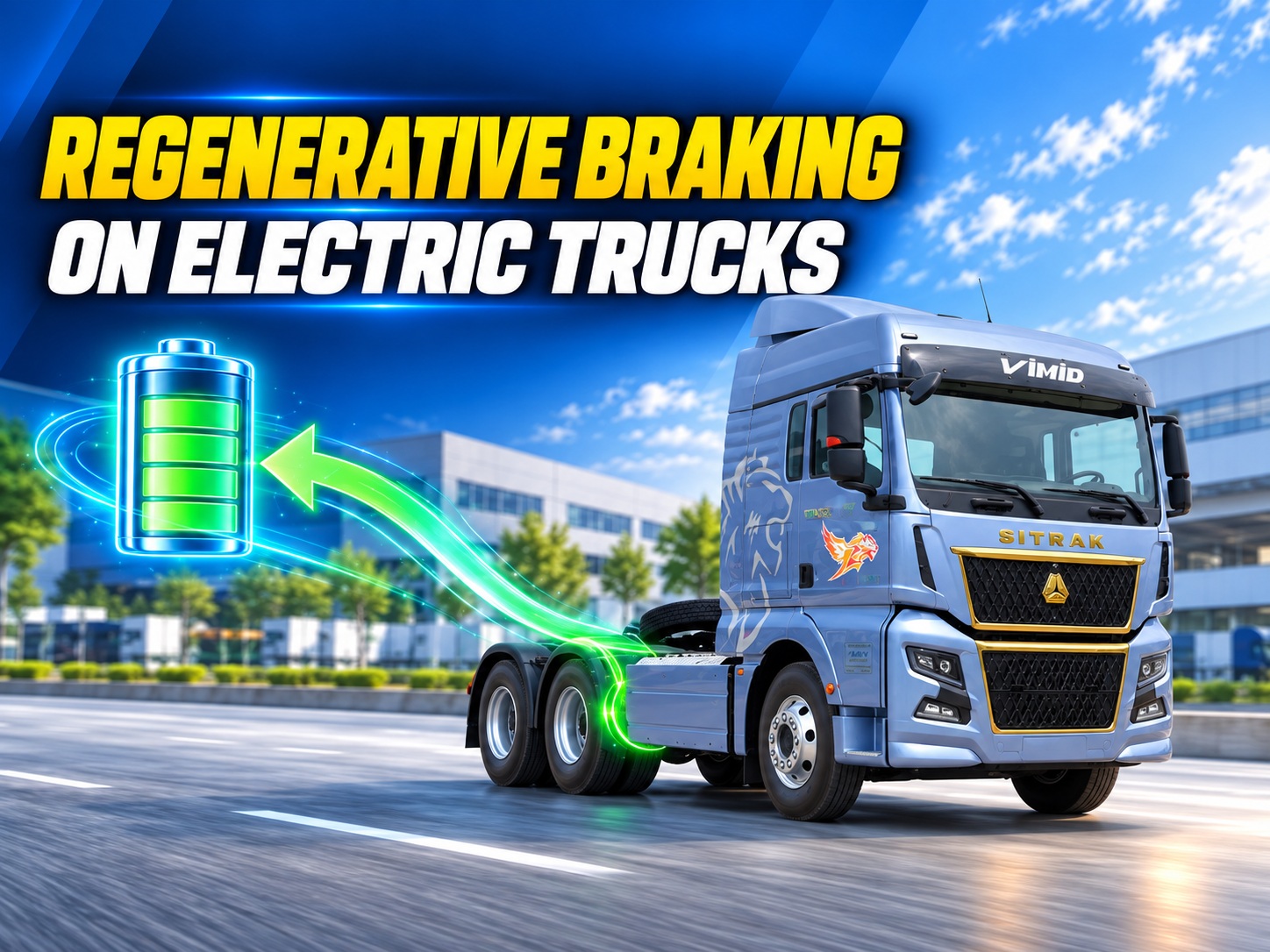
When the driver presses the accelerator pedal, the battery supplies electrical energy through the control system to power the electric motor. The motor generates torque and transmits it to the wheels, propelling the vehicle forward. During deceleration, many BEVs can use regenerative braking to convert part of their kinetic energy into electrical energy and store it back in the battery.
The entire process operates without an internal combustion engine, simplifying certain drivetrain components compared with gasoline- or diesel-powered vehicles.
Differences Between BEVs, PHEVs, HEVs, and FCEVs
In addition to BEVs, the automotive market uses several other terms to distinguish vehicles by their powertrain technology and energy sources.
BEV – Battery Electric Vehicle
BEVs run entirely on electricity stored in a battery pack and do not have an internal combustion engine. They require charging from an external power source and can recover some energy during deceleration. This technology is used in many electric passenger cars, electric buses, and electric trucks today.
PHEV – Plug-in Hybrid Electric Vehicle
PHEVs combine an internal combustion engine with an electric motor and a battery pack that can be charged from an external power source. These vehicles can travel on electric power alone for a certain distance, then use the internal combustion engine or combine both power sources, depending on their design.
PHEVs are suitable for users who need flexibility when traveling on routes with varying levels of charging infrastructure.
HEV – Hybrid Electric Vehicle
HEVs combine an internal combustion engine with an electric motor but do not require charging from an external power source. The battery is charged through the internal combustion engine and regenerative braking.
FCEV – Fuel Cell Electric Vehicle
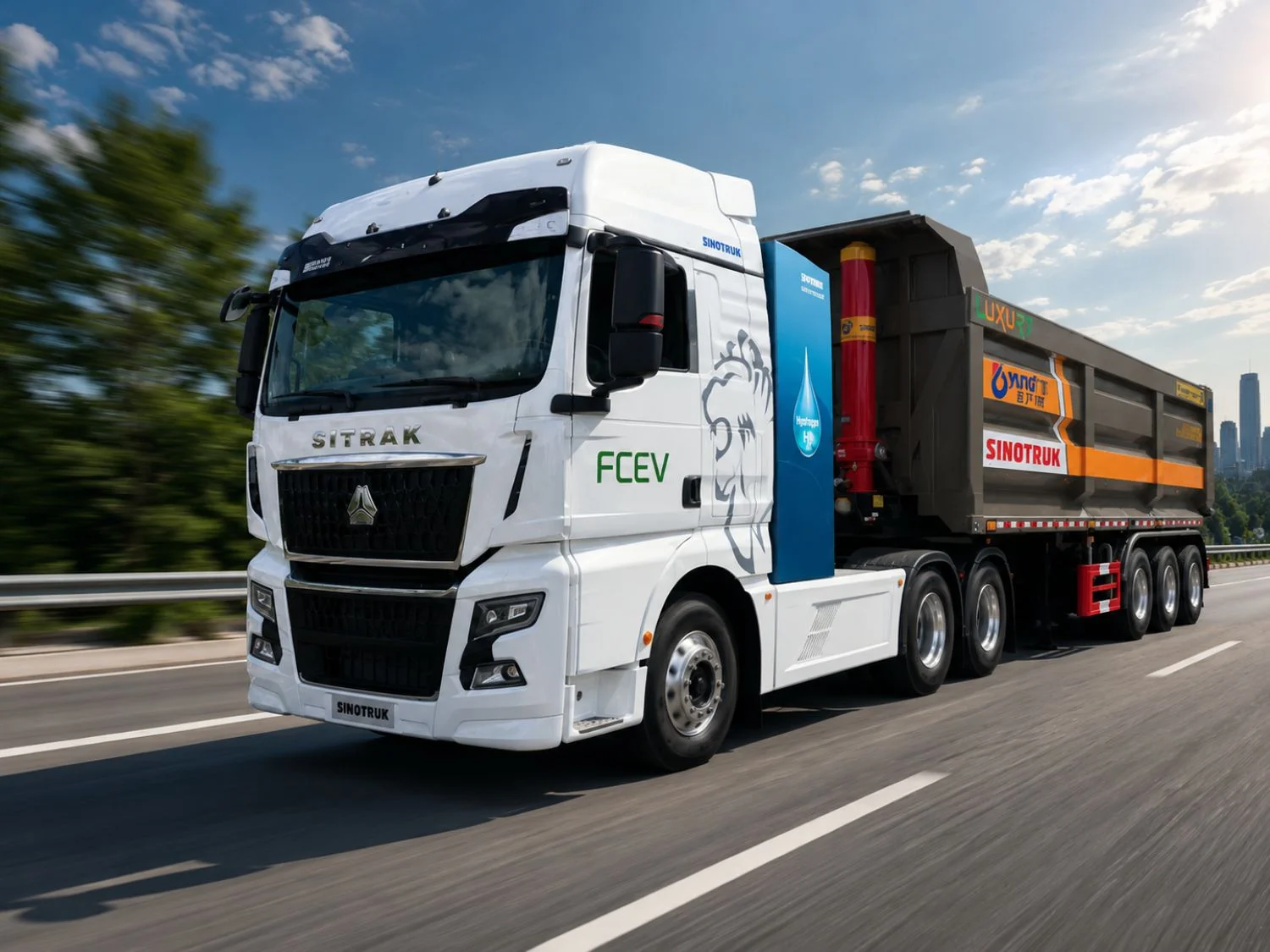
FCEVs use fuel cells to convert the chemical energy of hydrogen into electrical energy, which powers an electric motor. Unlike BEVs, FCEVs are primarily refueled with hydrogen rather than by charging a large traction battery from the electrical grid. Water is the byproduct of the hydrogen fuel cell system, and no direct CO₂ emissions are produced at the tailpipe during operation.
Comparison of New Energy Vehicle Types
| Criteria | BEV | PHEV | HEV | FCEV |
|---|---|---|---|---|
| Energy source | Electricity | Electricity + fuel | Fuel + electricity | Hydrogen |
| Electric motor | Yes | Yes | Yes | Yes |
| Internal combustion engine | No | Yes | Yes | No |
| External charging | Yes | Yes | No | Usually no |
| Fuel refilling | No | Yes | Yes | Hydrogen |
| Tailpipe CO₂ emissions | None | Yes, when using fuel | Yes | None |
How Is BEV Technology Applied to Electric Trucks?
In freight transportation, BEV technology is being adopted across a range of commercial vehicles, from urban delivery trucks to electric tractor trucks used for container transportation and logistics.
Key Characteristics of BEV Electric Trucks
Compared with conventional diesel trucks, BEV electric trucks have several notable characteristics:
- Electric motor propulsion: Delivers high torque from low speeds, supporting vehicle starts under load.
- No diesel consumption for traction: Reduces dependence on fossil fuels during operation.
- Regenerative braking capability: Recovers part of the vehicle’s kinetic energy during deceleration and returns it to the battery.
- No direct exhaust emissions: Supports emission-reduction goals in urban areas, ports, and warehouses.
- Charging infrastructure requirements: Operational efficiency depends on battery capacity, transportation distance, and the time available for recharging.
HOWO Electric Truck Models Using BEV Technology
Several HOWO/SITRAK electric tractor truck models currently use BEV technology, including the G7X EV and TX EV.
| Model | Battery Capacity | Key Features |
|---|---|---|
| HOWO G7X EV High-Roof Electric Tractor Truck | 342 kWh | Designed for container transportation and suitable logistics routes |
| HOWO G7X EV Low-Roof Electric Tractor Truck | 342 kWh | CATL battery and DC fast-charging capability |
| HOWO TX EV 6×4 Electric Tractor Truck | 400 kWh | High-power electric motor, designed for logistics transportation and port connectivity |
These models use lithium-ion battery packs to power their drivetrains, replacing diesel engines with electric motors. Notably, the HOWO TX EV 6×4 features a 400 kWh LFP battery pack, a 520 kW electric motor, and a maximum torque of 3,000 Nm.
BEV technology creates new options for freight operators with stable routes, particularly for container transfers, port transportation, and logistics operations in industrial parks.
Advantages and Limitations of BEVs
Although BEVs belong to the new energy vehicle category, they have their own advantages and challenges compared with other powertrain technologies.
| Advantages | Limitations |
|---|---|
| No direct exhaust emissions | Dependence on charging infrastructure |
| High electric drivetrain efficiency | Recharging may take longer than refueling |
| Ability to recover energy during braking | Driving range depends on battery capacity and operating conditions |
| Fewer maintenance items associated with internal combustion engines | Initial investment costs may be high |
| Quiet operation with less motor noise | Battery lifespan and condition require management |
For electric trucks, BEV technology tends to deliver greater benefits when vehicles operate on fixed routes, have access to suitable charging infrastructure, and are used frequently enough to justify the investment. Conversely, businesses operating on continuous long-distance routes with limited charging access or very short allowable stopping times should carefully assess feasibility before switching to BEVs.
Conclusion
Understanding what NEVs and BEVs are, as well as the differences between the various types of new energy vehicles, helps individuals and businesses make informed investment decisions and prepare for the transition toward sustainable green transportation. Depending on charging infrastructure, travel distances, and operating budgets, each electrification technology offers its own practical economic benefits.
Are you looking for genuine electric trucks or new energy tractor trucks with optimized costs and reliable warranty policies? Contact VIMID at 19001089 for expert advice and transportation solutions tailored to your business needs.
Related news
Many businesses remain hesitant about electric trucks. However, advances in battery technology and modern charging systems have helped address many long-standing misconceptions about electric vehicles. In practice, electric trucks can reduce long-term operating costs under suitable operating conditions and support the shift toward greener transportation. Let’s explore the most common misconceptions about electric trucks to […]
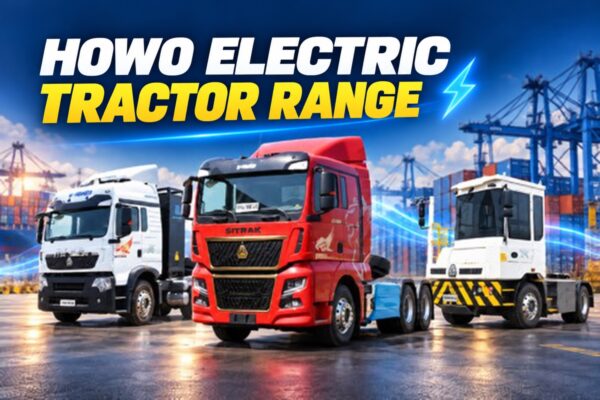
HOWO electric tractor trucks offer transportation businesses an additional option for container transportation, logistics, and port operations. Models such as the G7X EV, TX EV, and electric port tractors feature different battery configurations, cab designs, and equipment to meet specific operational requirements. To choose the right vehicle, businesses should consider their routes, charging infrastructure, and […]
The battery is a critical component that directly affects the driving range, operating performance, and operating costs of electric trucks. Therefore, electric truck battery lifespan is one of the key concerns for transportation businesses when transitioning to electric vehicles. So, how many years can an electric truck battery last, and what factors affect its durability? […]