


What Is Regenerative Braking? Operating Principle and Applications in Electric Vehicles
What Is Regenerative Braking?
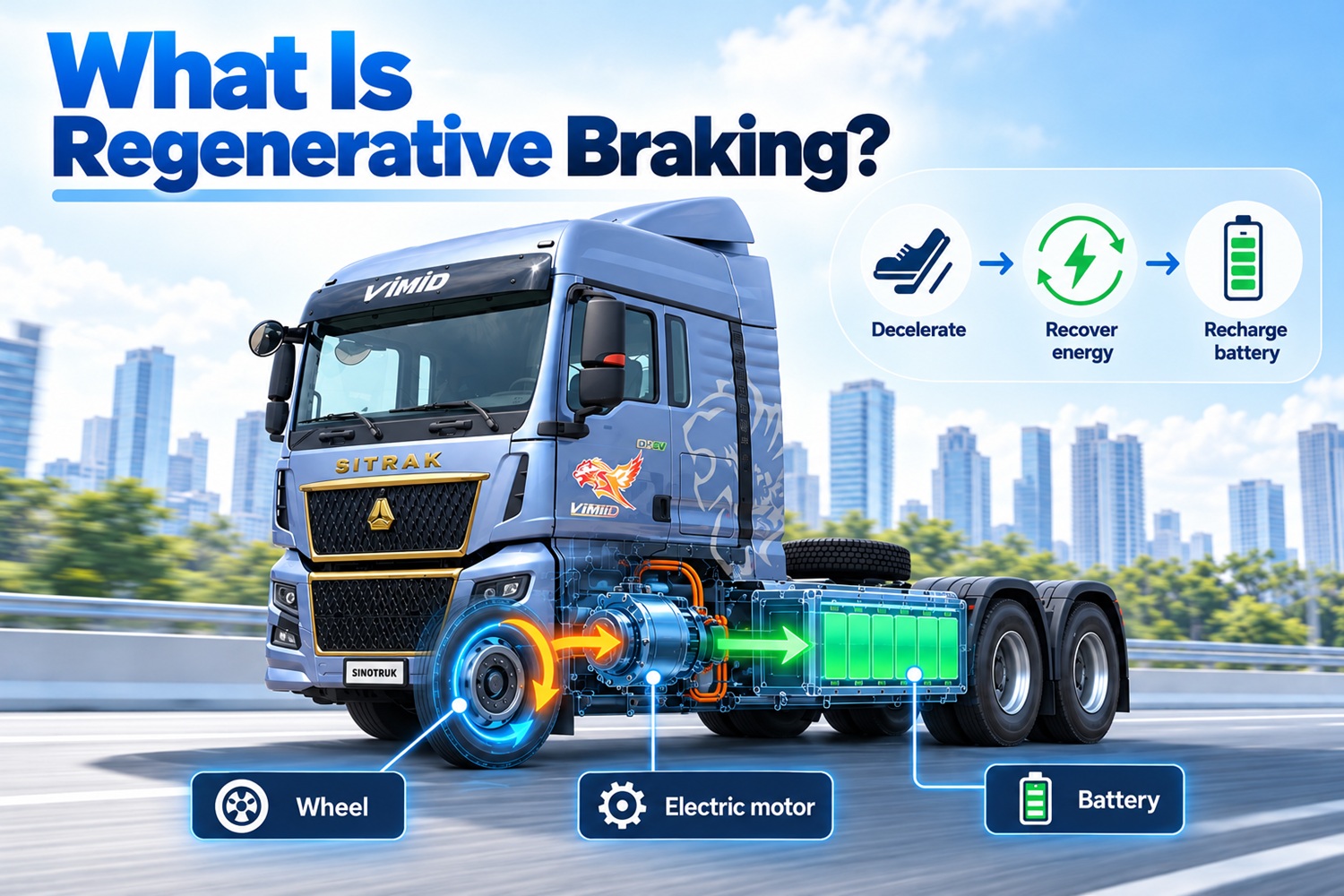
Regenerative braking is a system that uses the electric motor to generate braking force as the vehicle slows down, while converting part of its kinetic energy into electrical energy and returning it to the battery. Unlike conventional friction brakes, which convert kinetic energy into heat through friction between the brake pads and discs or drums, regenerative braking allows some of the energy that would otherwise be lost to be recovered.
Advantages of Regenerative Braking in Electric Trucks
For electric trucks, particularly electric tractor trucks and heavy-duty commercial vehicles, regenerative braking offers several benefits during operation.
Reducing Energy Consumption and Extending Driving Range
The most significant benefit of regenerative braking is its ability to recover part of the energy generated during deceleration for reuse. As a result, the vehicle can reduce its net battery energy consumption per trip, thereby extending its driving range under suitable conditions. This benefit is particularly noticeable when the vehicle travels on routes involving frequent deceleration, stops, or changes in elevation.
Reducing Brake Pad Wear and Mechanical Brake Wear
Regenerative braking generates braking force through the electric motor, potentially reducing the frequency or intensity of friction brake use during normal deceleration. This helps limit wear on brake pads, discs, or drums, potentially lowering component replacement costs. However, mechanical brakes still require regular inspection and maintenance in accordance with the manufacturer’s recommendations.
Supporting Speed Control on Downhill Roads
For electric trucks carrying heavy loads, regenerative braking can help maintain speed on downhill sections by generating braking force through the electric motor. As a result, the friction braking system may experience a reduced thermal load under certain operating conditions.
However, regenerative braking force depends on the battery’s ability to accept recovered energy. When the battery is nearly full or the system limits energy recovery, braking force from regeneration may decrease. Therefore, drivers must continue to use the appropriate braking mode, gear selection, and assistance systems according to the manufacturer’s instructions. They must not rely entirely on regenerative braking when descending long slopes.
Optimizing Operating Costs
Regenerative braking can help reduce electric truck operating costs through two main factors: lower net energy consumption and reduced mechanical brake wear. For businesses operating large fleets continuously on routes involving frequent deceleration, the cumulative savings over time can be significant.
Applications of Regenerative Braking Systems
This technology is used in various vehicles powered by electric motors, including hybrid vehicles, electric passenger cars, electric buses, and electric trucks.
| Application | Primary Use | Benefits |
|---|---|---|
| Battery Electric Vehicles (BEVs) | The electric motor acts as a generator when the driver releases the accelerator or applies the brakes, sending recovered energy back to the battery. | Extends driving range, reduces electricity consumption, and minimizes brake pad wear. |
| Hybrid Electric Vehicles (HEVs) | Combines regenerative braking with mechanical braking, with recovered energy supporting the gasoline engine. | Improves fuel efficiency, especially in urban areas with frequent stop-and-go traffic. |
| Electric Trucks and Buses | Slows vehicles when approaching stops, traffic lights, and downhill sections. | Reduces energy costs, heat generation, and brake wear when carrying heavy loads. |
| Electric Railways and Subways | Trains recover energy when slowing down at stations, feeding it back into the grid or storing it in batteries or other energy storage systems. | Reduces the electricity required to operate the system. |
| Electric Bicycles and Motorcycles | The motor/generator recovers energy during braking. | Extends driving range and supports auxiliary electrical systems. |
The following electric trucks are equipped with regenerative braking systems:
How Does Regenerative Braking Work?
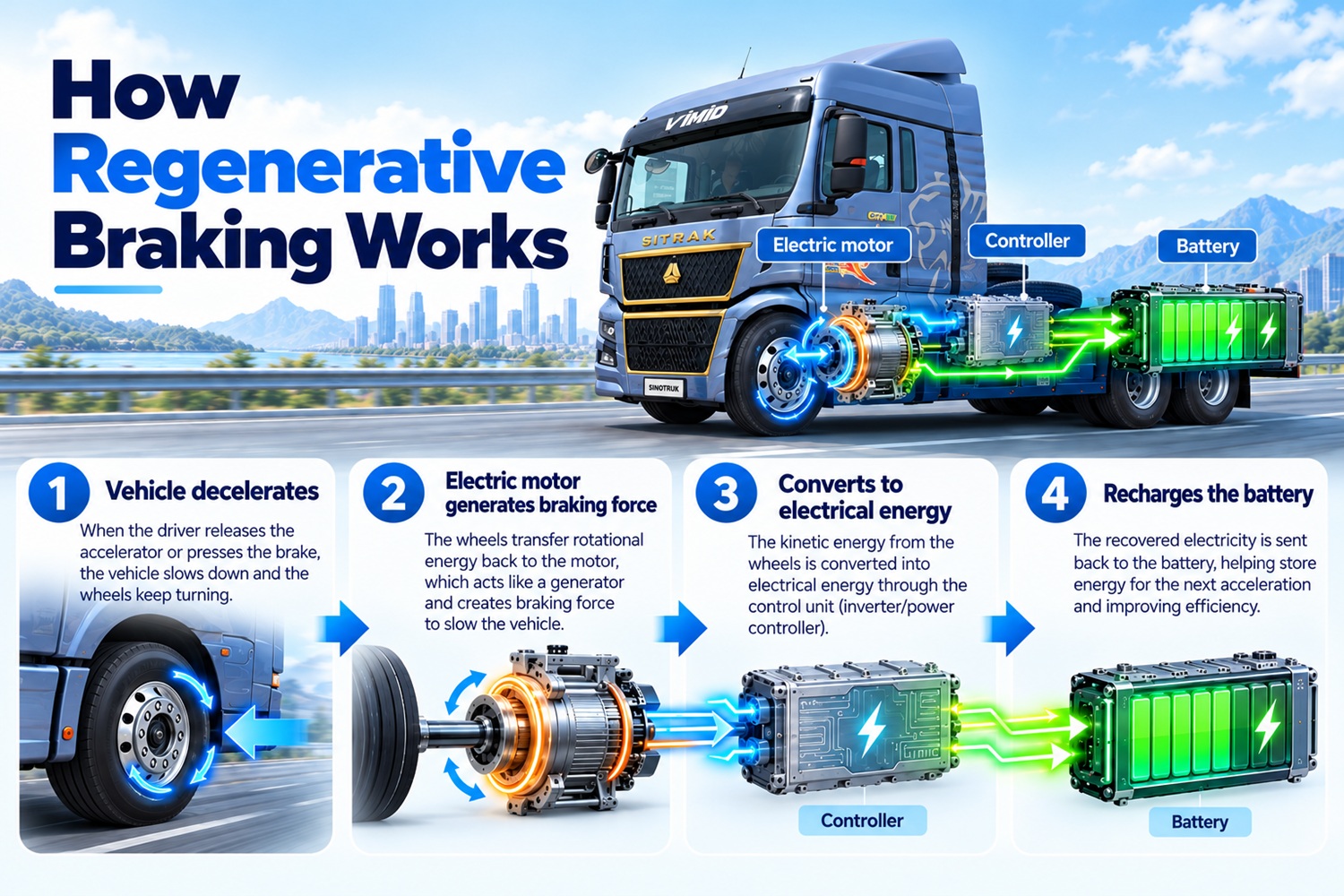
The operating principle of regenerative braking is based on the bidirectional capability of an electric drivetrain: the motor uses electrical energy to generate motion and can also operate as a generator when the vehicle decelerates.
The energy recovery process involves the following steps:
Vehicle deceleration: The driver releases the accelerator or applies the brakes, depending on the vehicle’s design.
The electric motor generates braking force: The wheels transmit mechanical energy to the motor, which operates in generator mode.
Conversion into electrical energy: The power control unit processes the recovered electrical current.
Energy returned to the battery: The battery stores the recovered electricity for subsequent acceleration.
For example, when an electric truck travels downhill, part of its kinetic energy can be converted into electrical energy through the electric motor. The braking force generated by the motor also helps control the vehicle’s speed.
Energy recovery depends on vehicle speed, motor power, battery state of charge, and operating conditions. When regenerative braking alone cannot provide sufficient braking force, the mechanical braking system supplements it to meet deceleration requirements.
How Much Energy Can Regenerative Braking Recover?
The effectiveness of regenerative braking is not fixed; it depends on vehicle design, speed, payload, terrain, and the battery’s ability to accept electrical energy. Some review studies suggest that well-designed systems can return approximately 60-80% of the mechanical energy at the wheels to the battery. However, over an entire journey, the recovered energy typically accounts for only around 10-30% of total energy consumption, depending on driving conditions.
Limitations of Regenerative Braking Systems
Despite its advantages, regenerative braking also has technical limitations that electric truck operators need to understand.
| Condition | Effect on Regenerative Braking |
|---|---|
| Battery nearly full or fully charged | Reduces the battery’s ability to accept recovered energy. |
| Battery too cold or too hot | The system may limit regenerative braking power. |
| Vehicle traveling at very low speeds | Energy recovery capability generally decreases. |
| Hard braking or emergency braking | Friction brakes must assist or provide most of the braking force. |
| Slippery roads or low-traction surfaces | The control system may reduce regenerative braking force to maintain vehicle stability. |
Another important limitation is that not all kinetic energy can be recovered during braking. Some energy is still lost through inefficiencies in the motor, power converter, battery, and mechanical components. Therefore, regenerative braking is a technology for improving energy efficiency, not a means of generating energy independently or operating a vehicle without recharging.
How to Use Regenerative Braking Effectively in Electric Trucks
To maximize energy recovery, drivers should combine regenerative braking with appropriate driving techniques.
Anticipate traffic and decelerate early: Monitor traffic conditions and avoid unnecessary acceleration followed by sudden braking. Gradual deceleration gives the system more opportunities to recover energy within its design limits.
Select the appropriate regenerative braking mode: Some electric vehicles allow drivers to adjust the level of regenerative braking. Drivers should select the appropriate mode according to the manufacturer’s instructions and road conditions.
Check the battery state of charge before descending hills: A nearly full battery may limit energy recovery and regenerative braking force. On long, steep downhill routes, drivers should plan ahead to maintain safe speed control.
Do not replace mechanical brakes with regenerative braking: When rapid deceleration or emergency stopping is required, drivers must still use the vehicle’s braking system as designed.
Maintain the electrical and braking systems: The electric motor, control unit, battery, and mechanical brakes should be inspected and maintained regularly to ensure reliable operation.
Conclusion
Regenerative braking is a technology that uses an electric motor to convert part of a vehicle’s kinetic energy during deceleration into electrical energy, which is then fed back into the battery. In electric trucks, this technology offers practical benefits, including reduced energy consumption, extended driving range, less wear on mechanical brakes, and improved vehicle operating efficiency.
Featured news
Related news

The shift toward green transportation is reshaping how logistics companies invest in and operate their fleets. Among the emerging solutions, electric trucks are attracting increasing attention thanks to their ability to reduce operating costs, deliver stable performance, and support the long-term sustainability goals of modern transportation businesses. As one of Vietnam’s pioneers in green transportation […]
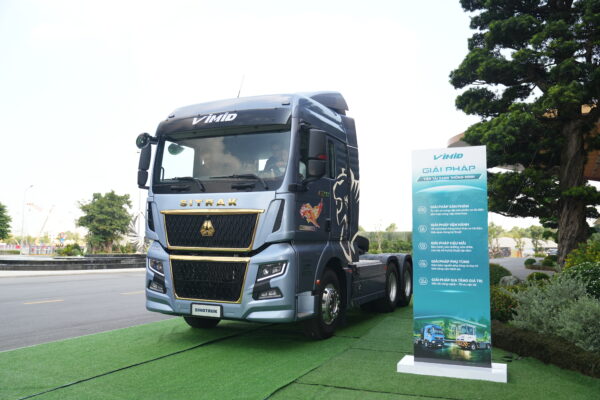
At Young Entrepreneurs’ Gala 2026, organised by the Hanoi Young Business Association (HanoiBA) on 2 October 2026, VIMID made a strong impression with a showcase featuring the G7X-EV electric tractor truck and an integrated ecosystem of smart, green transport solutions. The presence of a heavy-duty electric vehicle already in commercial operation highlighted tangible progress in […]

As the official authorized distributor of SINOTRUK to provide genuine after-sales services in Vietnam, VIMID affirms its position as a leading strategic partner, delivering optimal and sustainable operational solutions for HOWO heavy-duty trucks.