


Electric Truck Battery Swapping Technology: An Optimal Solution for Maximizing Operational Uptime
The development of electric trucks is creating numerous opportunities for vehicle electrification in the freight transportation industry. However, charging time and the ability to maintain continuous operations remain key concerns for businesses. In this context, battery swapping technology for electric trucks is emerging as a noteworthy solution, enabling vehicles to replenish their energy quickly without having to wait for extended direct charging sessions. So, how does this technology work, what benefits does it offer, and is it suitable for actual operating conditions in Vietnam?
What Is Electric Truck Battery Swapping Technology?
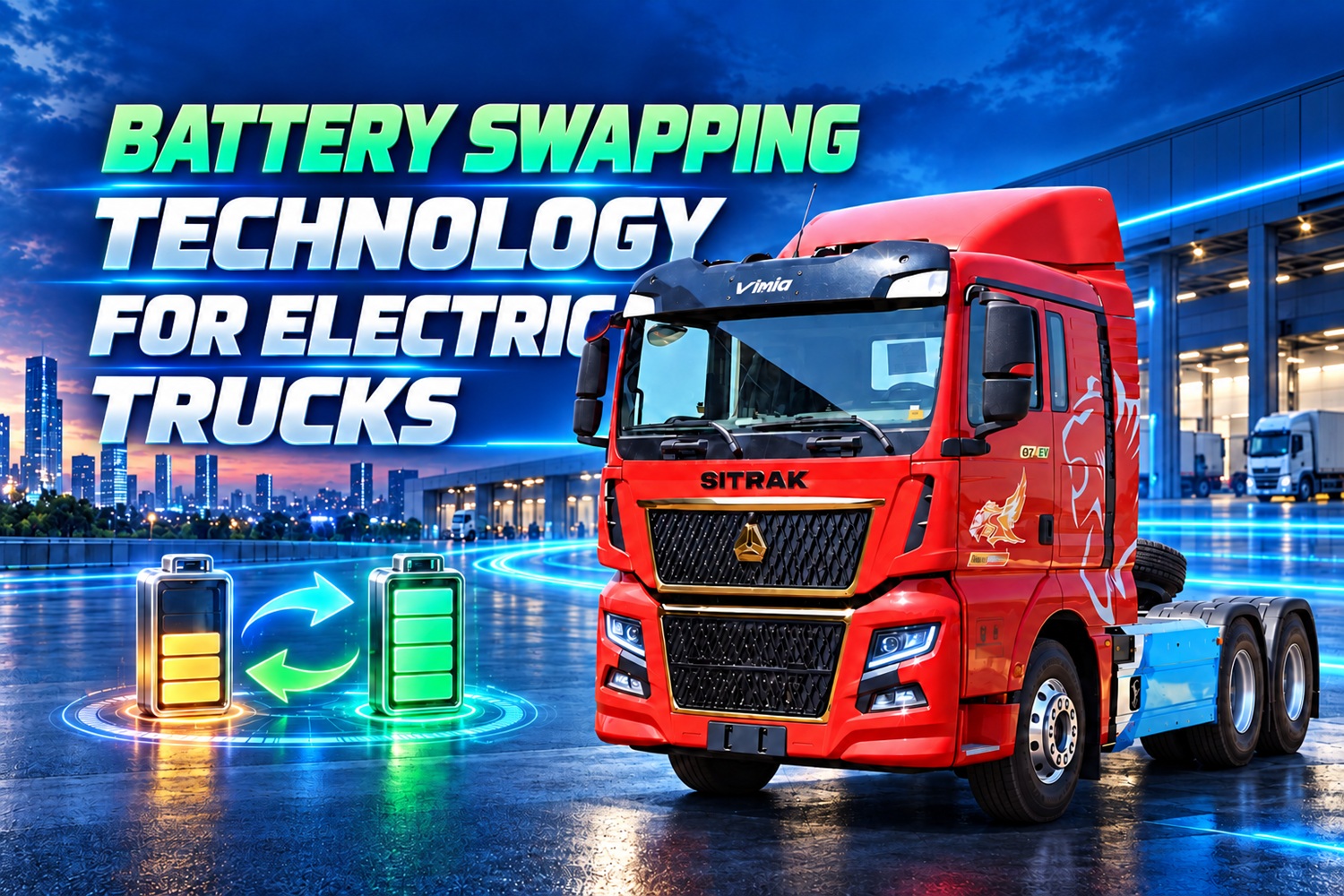
Electric truck battery swapping technology, also known as Battery Swapping, is a method of replenishing energy by replacing a depleted battery pack with another fully charged battery pack at a dedicated swapping station. Instead of connecting the vehicle to a charger and waiting for the battery to recharge, the truck simply travels to a compatible battery swapping station for the replacement process.
The key advantage of this solution is that it separates battery charging time from vehicle operating time. While the truck continues transporting goods using the newly installed battery pack, the removed battery is charged and managed at the station, where it is prepared for subsequent use.
To implement battery swapping technology, vehicles must be designed with removable battery configurations, compatible electrical connection systems, and battery management mechanisms that are compatible with the swapping station. This is an important requirement because not all electric truck models currently support battery swapping.
For transportation businesses, this solution introduces a new approach to fleet management, particularly in areas with high transportation volumes and a need for continuous vehicle operation.
How Does an Electric Truck Battery Swapping System Work?
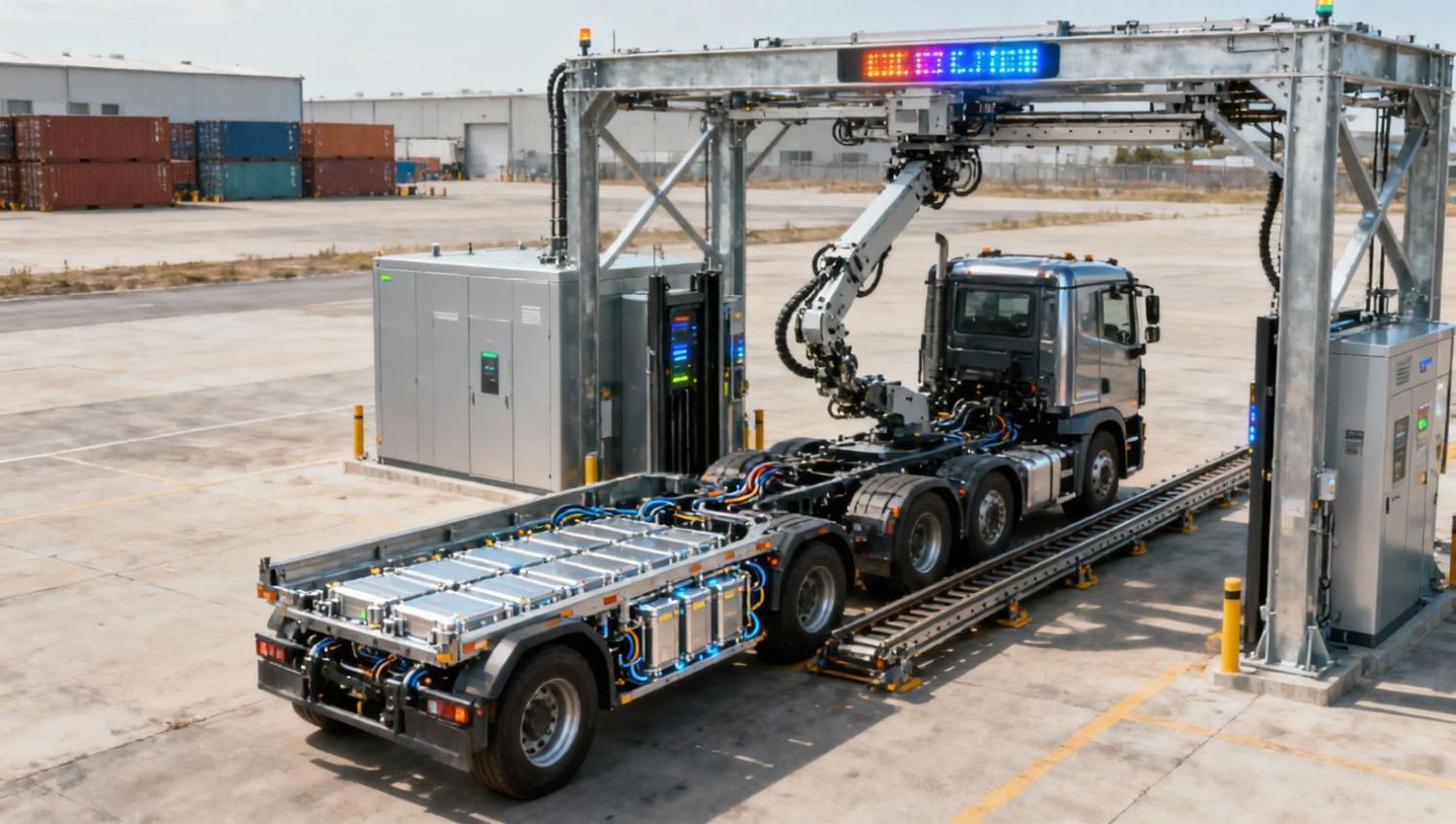
Battery replacement takes place at dedicated stations equipped with mechanical devices, automated control systems, and electrical safety monitoring components. Depending on the vehicle design, batteries may be installed in different positions on the chassis, resulting in variations in the removal and installation methods.
Vehicle Reception and Identification
When an electric truck enters the station, the system identifies the vehicle and checks relevant information, including battery configuration, compatibility, and operating status.
The driver then positions the truck in the designated area so that the battery swapping equipment can access the battery accurately. Some advanced systems use sensors and positioning technologies to assist with alignment and minimize positioning errors.
Removing the Used Battery Pack
After the safety checks are completed, the system disconnects the electrical connections and releases the battery retention mechanism. Specialized lifting equipment or robots then remove the battery pack from its installation position.
This process is controlled according to technical procedures to protect the electrical connectors, mounting mechanisms, and other related vehicle components.
Installing a Fully Charged Battery Pack
The system selects a battery pack that meets the vehicle’s compatibility requirements and then moves it into the installation position. The locking mechanisms, electrical connections, and data communication interfaces are re-established according to the manufacturer’s design.
The replacement battery must meet the necessary technical requirements for voltage, state of charge, and operational capability.
System Verification Before the Truck Leaves the Station
After the battery is installed, the system verifies the connections and checks the electrical status and safety conditions. Once all requirements are satisfied, the truck can leave the station and resume its journey.
In some automated battery swapping systems, the entire replacement process can be completed in approximately 3–5 minutes. However, the actual duration depends on the station technology, vehicle design, availability of spare batteries, and the number of vehicles waiting for service.
Why Is Battery Swapping Attracting Attention in Freight Transportation?
Freight transportation requires vehicles to travel frequently with heavy loads, meet delivery schedules, and maintain reliable operating performance. Consequently, the time required to replenish energy directly affects vehicle dispatching and operational planning.
Minimizing Transportation Downtime
With conventional charging methods, electric trucks must remain stationary for a certain period to replenish their energy. The charging duration depends on the charger’s power output, battery capacity, and actual charging state.
Battery swapping reduces the waiting time required to replenish energy by using battery packs that have been prepared in advance. This advantage is particularly significant for businesses operating vehicles across multiple shifts or needing to maintain continuous delivery schedules.
When properly organized, a battery swapping station can help increase the amount of time vehicles remain available for work.
Supporting High-Intensity Fleet Operations
For fleets transporting containers, handling internal logistics, or moving goods between factories and warehouses, scheduling charging sessions for multiple vehicles can become complicated.
Battery swapping systems allow businesses to establish energy replenishment plans based on individual operating shifts. Battery packs circulate between vehicles and stations, giving operators greater flexibility in allocating operating time.
Enabling Centralized Battery Management
When batteries are charged and monitored centrally, operators can track the technical condition of each battery pack, including its state of charge, temperature, and state of health (SOH).
Planned charging can also help control power demand, select appropriate charging periods, and reduce reliance on continuous fast charging. This is an advantage worth considering for businesses operating large numbers of electric vehicles within a specific area.
Creating Opportunities to Separate Vehicle and Battery Investment
Some electric truck business models separate ownership of the vehicle from ownership of the battery. Under these arrangements, a business can own the truck while accessing battery packs through a leasing service or an energy supply contract.
This approach may reduce the initial capital investment required for batteries while shifting part of the expenditure to the operational stage.
However, the financial benefits must be evaluated based on total long-term costs, including battery leasing fees, swapping service charges, transportation volume, and relevant service agreement terms.
Battery Swapping vs. Direct Charging: Which Option Is Suitable for Electric Trucks?
Both solutions aim to supply energy to electric vehicles, but they differ significantly in infrastructure requirements and operating methods.
| Criteria | Battery Swapping Technology | Direct Charging |
|---|---|---|
| Operating principle | Replacing a used battery pack with a pre-charged one | Charging the battery installed in the vehicle |
| Energy replenishment time | Fast battery replacement when a charged battery is available | Depends on charging power and the amount of energy required |
| Required infrastructure | Battery swapping station, automated equipment, charging systems, and spare battery packs | Charging stations, power supply, and parking spaces |
| Operational model | Suitable for fleets requiring continuous operation | Convenient when vehicles have sufficient downtime |
| Compatibility | Requires compatible vehicle and station designs | Requires compatibility with charging standards and charging systems |
| Cost | Depends on the battery leasing model, service fees, and infrastructure | Depends on electricity prices, charging equipment, and investment costs |
For vehicles that primarily operate during the day and can be charged overnight at a depot, direct charging may be a simpler and more cost-effective option.
Conversely, fleets operating continuously, following predictable routes, and seeking to minimize downtime may consider battery swapping.
Studies on heavy-duty electric trucks also indicate that battery swapping can improve transportation efficiency by reducing vehicle downtime, but it simultaneously increases the number of batteries required across the entire system.
Therefore, no single energy replenishment method is optimal for every transportation business. The choice should be based on operating characteristics, infrastructure availability, and the total cost of ownership (TCO).
Factors to Consider Before Investing in Battery-Swappable Electric Trucks
Although battery swapping offers considerable potential, its implementation requires coordinated preparation across vehicles, infrastructure, and business models.
Availability and Coverage of the Battery Swapping Network
The effectiveness of battery-swappable electric trucks depends heavily on the location and density of service stations.
If vehicles must travel excessive distances to reach a swapping station, the additional travel time and energy consumption may reduce the technology’s advantages.
Businesses should assess the distance between transportation routes and swapping stations, service capacity during peak hours, and contingency plans for situations in which compatible battery packs are unavailable.
Compatibility Between Batteries, Vehicles, and Swapping Equipment
Electric truck batteries may differ in structure, capacity, dimensions, management systems, and connection methods.
Therefore, the fact that multiple vehicle models use batteries from the same manufacturer does not necessarily mean their batteries are interchangeable.
Before investing, businesses should verify which vehicle configurations are supported by the station, along with battery specifications and other relevant technical requirements.
Long-Term Investment and Operating Costs
A battery swapping system involves more than just battery removal and installation equipment. It also requires installation space, a power supply, charging systems, fire protection equipment, management software, and a certain inventory of spare batteries.
If a business uses a third-party service, battery leasing fees and swapping charges must also be included in transportation cost calculations.
A suitable evaluation method is to determine the total operating cost per kilometer or per ton of goods transported rather than comparing only the initial vehicle purchase price.
Battery Quality and Service Life
In a battery swapping model, vehicles may receive battery packs that have undergone different numbers of usage cycles. Therefore, quality control at the swapping station is essential.
Service providers need procedures for assessing battery condition, monitoring energy storage capacity, and removing battery packs that fail to meet technical requirements.
In addition, responsibilities for maintenance, replacement, and warranty coverage should be clearly defined to minimize risks during operation.
Potential for Electric Truck Battery Swapping in Vietnam
As the transportation industry moves toward greener operations, battery swapping offers an additional option for businesses evaluating fleet electrification strategies.
In Vietnam, transportation models with predictable routes and concentrated operations may represent promising applications.
- Port and logistics transportation: Electric tractor units and container transfer vehicles often operate within defined areas. Establishing battery swapping stations at suitable locations can support multi-shift operations and reduce downtime.
- Transportation within industrial parks: Routes between factories, warehouses, and distribution centers often follow relatively predictable schedules. This creates favorable conditions for assessing energy requirements and planning station locations.
- Material transportation at construction sites and concentrated mining areas: Electric dump truck fleets operating within defined areas may consider battery swapping if site conditions, power supply, and operating intensity meet the necessary requirements.
- Long-haul freight transportation: Battery swapping can help reduce energy replenishment time, but its benefits can only be fully realized when a suitable network of stations is available along the routes and the operating system is sufficiently reliable.
In practice, major battery manufacturers continue to invest in battery swapping solutions for heavy-duty trucks. In October 2026, CATL announced further developments in its battery platform and truck battery swapping network in China, indicating that this technology continues to expand and evolve.
VIMID Supports Businesses in the Transition to Electrified Transportation
The emergence of new energy replenishment technologies is changing how businesses evaluate and select transportation vehicles. In addition to payload capacity, power output, and driving range, access to energy infrastructure and long-term operating efficiency are increasingly important selection criteria.
With a focus on developing green transportation solutions, VIMID is introducing electric tractor truck models alongside solutions related to charging infrastructure and operational support services.
Vehicle selection should begin with a specific transportation assessment, including cargo type, required payload, travel distance, number of operating shifts, and energy supply conditions.
Businesses interested in electric trucks can explore VIMID’s product information and contact the company for advice on vehicle configurations, operating plans, and the necessary infrastructure requirements.
Conclusion
Electric truck battery swapping technology offers a promising approach to addressing energy replenishment time in freight transportation. By enabling the rapid replacement of battery packs that have been charged in advance, this technology can reduce vehicle downtime and support operational continuity.
However, its effectiveness depends on several factors, including compatibility between vehicles and stations, battery availability, operating intensity, and total operating costs. For businesses, thoroughly evaluating these factors provides a basis for selecting the most suitable investment option.
As green transportation continues to develop, VIMID remains committed to providing vehicle solutions and technical support, helping customers modernize their fleets and improve transportation efficiency.
Featured news
Related news

The shift toward green transportation is reshaping how logistics companies invest in and operate their fleets. Among the emerging solutions, electric trucks are attracting increasing attention thanks to their ability to reduce operating costs, deliver stable performance, and support the long-term sustainability goals of modern transportation businesses. As one of Vietnam’s pioneers in green transportation […]
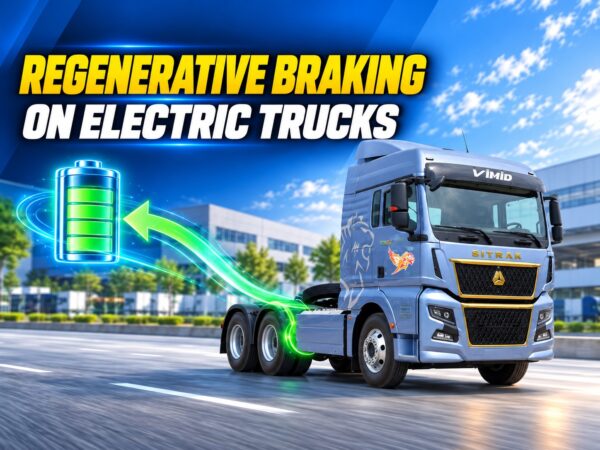
Regenerative braking is one of the key technologies that helps electric vehicles optimize energy efficiency. Instead of allowing all kinetic energy to be converted into heat and lost during deceleration, this system can recover part of that energy and feed it back into the battery. For electric trucks that frequently carry heavy loads, travel on […]
Many businesses remain hesitant about electric trucks. However, advances in battery technology and modern charging systems have helped address many long-standing misconceptions about electric vehicles. In practice, electric trucks can reduce long-term operating costs under suitable operating conditions and support the shift toward greener transportation. Let’s explore the most common misconceptions about electric trucks to […]