


Are Electric Trucks More Cost-Effective Than Diesel Trucks?
Amid fluctuating fuel prices and the accelerating shift toward green transportation, many transport businesses are weighing the pros and cons of electric trucks versus conventional diesel trucks. Although electric trucks generally have higher upfront purchase costs, their lower charging costs and simpler maintenance requirements can significantly optimize operating budgets. Let’s take a closer look at the long-term economics to determine whether electric trucks are truly a more profitable investment than diesel trucks.
Comparing the Initial Investment Costs of Electric and Diesel Trucks
The most noticeable difference between electric trucks and diesel trucks lies in their initial investment costs. Diesel trucks currently have an advantage in terms of purchase price, while electric trucks generally require greater upfront capital because they use traction battery systems and specialized energy management equipment.
According to the International Energy Agency’s (IEA) Global EV Outlook 2026, electric trucks in the markets studied may still cost two to three times as much to purchase as comparable diesel trucks. However, this price gap does not directly reflect their economic performance over the entire operating lifecycle.
In addition to the vehicle purchase price, businesses investing in electric trucks may incur costs for installing charging stations, upgrading power supply systems, or using battery-leasing services. Diesel trucks, meanwhile, benefit from an extensive network of fuel stations and maintenance services. Therefore, diesel trucks generally have the advantage when only the initial investment is considered. However, the results may change when operating costs over several years are taken into account.
How Do Electric Trucks Reduce Operating Costs Compared with Diesel Trucks?
Energy and maintenance costs are the two main factors that enable electric trucks to offset their higher initial purchase prices.
Electricity Costs Can Be Lower Than Diesel Fuel Costs
According to the IEA’s analysis in Global EV Outlook 2025, heavy-duty electric trucks are approximately 55% more energy-efficient than comparable diesel trucks. However, actual cost savings depend on electricity prices, fuel prices, and operating conditions in each market.
The illustrative calculation below provides a clearer picture.
| Vehicle Type | Reference Consumption | Energy Cost per 100 km |
|---|---|---|
| Diesel truck | 30 liters/100 km | Approximately VND 870,000, based on diesel at VND 29,000/liter |
| Electric truck | 120 kWh/100 km | Approximately VND 360,000, based on a standard electricity rate of VND 3,000/kWh |
Note: Consumption rates and energy prices are indicative figures. They vary over time and do not apply universally to all vehicle models.
Based on this calculation, an electric truck saves VND 510,000 in energy costs for every 100 km traveled, representing a reduction of approximately 58%. This illustrates how accumulated energy savings can become more substantial as mileage increases. Furthermore, if a business schedules charging during off-peak hours, energy costs may be reduced even further.
Electric Trucks Reduce Certain Routine Maintenance Costs
In addition to energy savings, electric trucks benefit from a different powertrain design. Compared with diesel engines, electric motors have fewer moving mechanical components and require fewer maintenance procedures associated with fuel combustion systems.
Some notable differences include:
- Engine oil and oil filters: Battery-electric trucks do not require engine oil changes in the same way as diesel trucks.
- Fuel system: They do not require maintenance of diesel fuel injection systems or the corresponding exhaust aftertreatment components.
- Braking system: Regenerative braking can reduce the use of friction brakes under suitable operating conditions.
- Powertrain: Fewer moving mechanical components can reduce certain maintenance requirements.
As a result, electric trucks may have lower maintenance costs than diesel trucks.
Are Electric Trucks More Cost-Effective in Terms of Total Cost of Ownership?
Electric trucks generally offer a lower total cost of ownership (TCO) than diesel trucks when they accumulate sufficient mileage, operate on fixed routes, and have adequate charging time. However, for heavy-duty trucks operating continuously over long distances, upfront investment, battery costs, and charging time may make diesel trucks a more practical choice.
Estimated Payback Period
| Operating Scenario | Typical TCO Outcome |
|---|---|
| Urban distribution, high daily mileage, frequent stops and starts | Electric trucks typically have 10–20% lower TCO, with a payback period of approximately 2-3 years. |
| Moderate utilization, with incentives or favorable electricity rates | Electric trucks typically have 5–15% lower TCO, with a payback period of approximately 3-4 years. |
| Heavy loads, long-distance routes, and limited charging opportunities | The difference narrows. Electric trucks may have only 0–10% lower TCO or costs may be nearly equal over 5-7 years. |
Estimated TCO Comparison Table
The following comparison is based on the G7X EV electric tractor truck.
| Cost Item (VND) | Cost Category / Period | Diesel Truck | Electric Truck |
|---|---|---|---|
| Initial investment in Year 1 | 1,428,850,000 | 3,400,850,000 | |
| Annual fuel/energy costs | 876,000,000 | 496,127,710 | |
| Annual maintenance and fixed costs | 138,326,000 | 75,576,000 | |
| Cumulative Total Cost (VND) | Year 1 | 2,443,176,000 | 3,972,553,710 |
| Year 2 | 3,457,502,000 | 4,544,257,420 | |
| Year 3 | 4,471,828,000 | 5,115,961,330 | |
| Year 4 | 5,486,154,000 | 5,687,664,840 | |
| Year 5 | 6,500,480,000 | 6,259,368,550 |
Based on this estimate, the electric truck begins to deliver cost savings compared with the diesel truck after approximately five years of ownership.
When Is Investing in Electric Trucks More Economical Than Diesel Trucks?
The cost-saving potential of electric trucks varies depending on operating conditions. The following factors can determine which option delivers better economic returns.
High Vehicle Utilization
Electric trucks can offer greater benefits when they regularly cover long distances because energy savings accumulate with every kilometer traveled. Conversely, if a vehicle is used infrequently, annual savings may not be sufficient to offset the additional upfront investment within the desired timeframe.
Stable Transport Routes and Suitable Charging Infrastructure
Businesses operating on fixed routes, with designated depots and scheduled vehicle downtime, are generally better positioned to organize charging. This helps minimize waiting time for recharging, avoid disruptions to delivery schedules, and control operating costs.
For long-distance transportation, if the charging network is inadequate, charging-related downtime and additional mileage to reach charging stations can reduce the economic advantages of electric trucks.
Payload Capacity and Transport Performance That Meet Business Requirements
When comparing electric and diesel trucks, businesses must ensure that both vehicles can handle an equivalent workload.
Battery capacity and weight can affect the available payload of certain electric truck models. If additional trips are required to transport the same volume of goods, actual operating costs will change. Therefore, in addition to cost per kilometer, businesses should calculate cost per ton of cargo or per completed trip.
Controlled Battery and Infrastructure Costs
The traction battery is one of the most valuable components of an electric truck. Battery lifespan, warranty policies, repair options, and replacement costs all affect investment performance. Similarly, electricity costs at public charging stations or battery-swapping facilities may differ from those associated with charging at a company-owned depot. These expenses must be fully accounted for to avoid overestimating the savings offered by electric trucks.
Which Businesses Should Consider Switching to Electric Trucks?
Different transportation sectors have different operating requirements. Therefore, the potential savings from electric trucks should be evaluated against each business’s specific operating scenario.
- Port container transportation: Routes between ports, storage yards, and logistics centers are often relatively predictable. With suitable energy infrastructure in place, electric tractor trucks can help businesses control costs and maintain transportation schedules.
- Industrial park freight transportation: Vehicles operating within a concentrated area, following predictable schedules and returning to the depot after each shift, are well suited to planned charging.
- Short- and medium-distance freight transportation: Electric trucks are worth considering when daily mileage falls within the vehicle’s practical operating range and the business can manage charging schedules.
- Long-distance transportation: Businesses need to carefully assess driving range, payload capacity, charging time, and the availability of infrastructure along their routes. In many cases, diesel trucks may remain more convenient if electric vehicle energy infrastructure does not yet meet operational requirements.
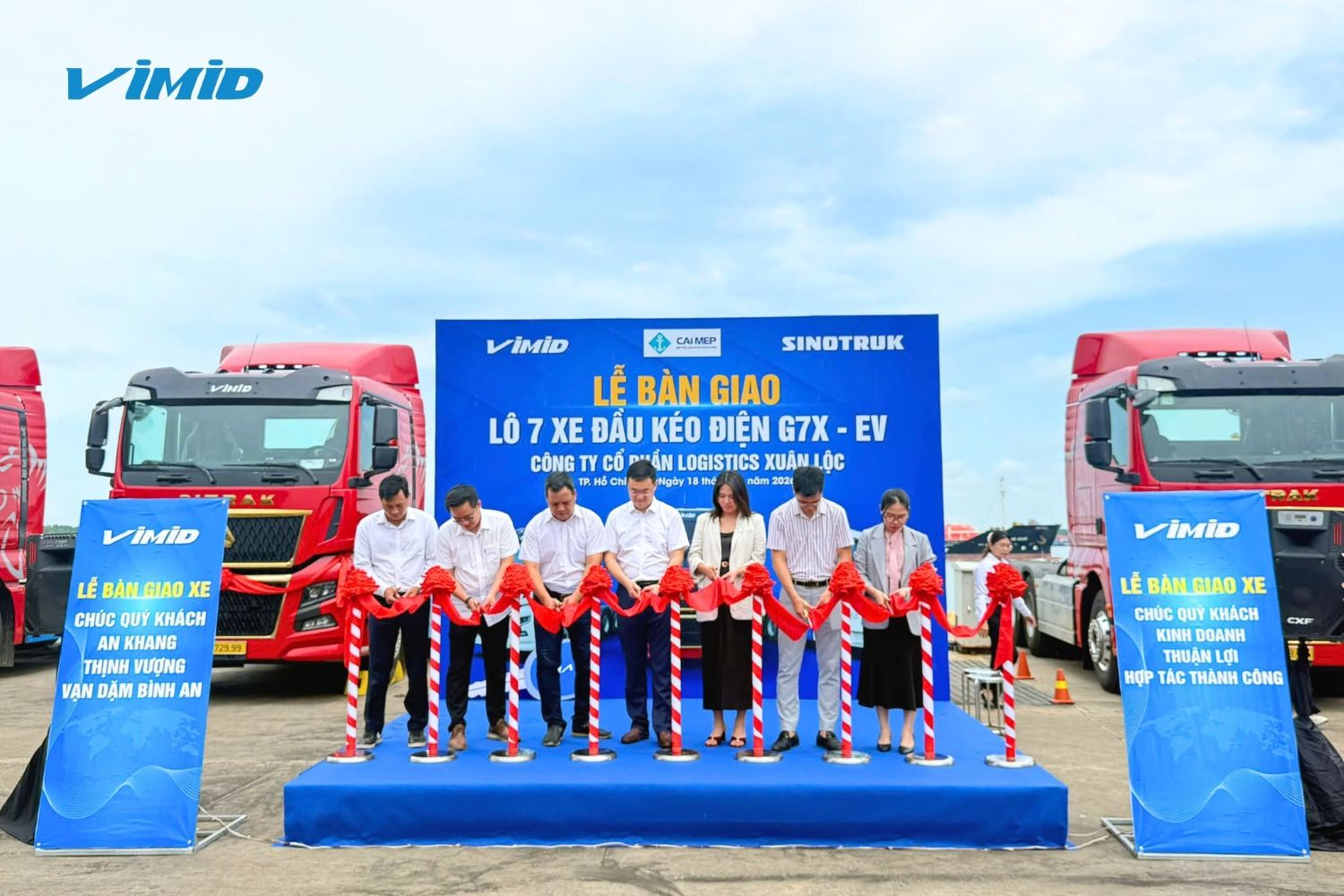
VIMID Provides Green Transportation Solutions Tailored to Business Needs
As transportation becomes increasingly electrified, selecting an electric truck should go hand in hand with a practical investment and operating plan. Businesses need more than a vehicle that meets their payload requirements; they must also consider battery configuration, driving range, and energy infrastructure.
VIMID currently offers green transportation solutions, including electric tractor trucks designed for freight transportation, logistics, and port operations.
Customers can explore the product range here: New Energy Vehicles.
Beyond supplying vehicles, VIMID aims to provide integrated solutions, including vehicle configuration consulting, charging and battery-swapping infrastructure planning, technical support, maintenance, and after-sales services throughout the vehicle’s operating life.
Customers can explore electric trucks, electric tractor trucks, and green transportation solutions on the VIMID website to find vehicles suited to their business needs.
Conclusion
Overall, electric trucks may require a higher initial investment, but their long-term economics can favor electric vehicles because of their potential to reduce fuel and maintenance costs significantly. For businesses with high vehicle utilization and a commitment to sustainable development, electric trucks can be more than a way to reduce operating expenses; they can also represent a strategic investment in future competitiveness.
Investing in electric trucks today can be a forward-looking decision for improving business efficiency and advancing the transition to greener transportation. Contact VIMID at 1900 1089 for consultation and the latest pricing information.
Featured news
Related news

On July 22, 2026, Vietnam Machine Investment Development Joint Stock Company (VIMID) and SINOTRUK officially signed a strategic cooperation agreement during the SINOTRUK New Energy Partners Conference, organized by Shandong Heavy Industry Group (SDHi)—SINOTRUK’s parent company and one of the world’s leading multinational industrial groups. The signing marks a new stage in the partnership between […]

Amid increasingly complex climate change challenges, achieving net zero emissions has become a global trend. As one of the sectors contributing significantly to global greenhouse gas emissions, the transportation industry is entering a new era marked by an unprecedented green revolution. In this transition, green transport has emerged as a symbol of a sustainable future mobility system.

Amid the growing demand for transportation and road logistics, the resulting emissions, fuel consumption, and environmental pollution have become major challenges to achieving global sustainable development goals. Addressing this issue requires the creation of an environmentally friendly transportation system more urgently than ever. Toward this objective, Vietnam Machine Investment Development Joint Stock Company (VIMID – Stock Code: VVS) has pioneered research and implementation of green transport solutions – not only contributing to reducing emission and operating costs, but also supporting logistics enterprises in their journey toward green transformation.