


Comparing Technologies in Electric Trucks BEV, PHEV, HEV, and REEV
BEV, PHEV, HEV, and REEV differ primarily in their energy sources, wheel-drive mechanisms, and ability to charge from an external power source. BEVs run entirely on electricity stored in a battery; HEVs combine an internal combustion engine with an electric motor but cannot be plugged in; PHEVs support external charging; and REEVs use an internal combustion engine to generate electricity, allowing the vehicle to continue operating through electric motors. Understanding these technologies will help buyers choose a vehicle that suits their driving routes, charging conditions, and operating budget.
Comparison of BEV, PHEV, HEV, and REEV
These four vehicle types can be quickly distinguished by asking two questions: Does the vehicle require fuel, and can it be plugged in for charging? To understand the difference between PHEVs and REEVs, it is also necessary to consider the role of the internal combustion engine.
| Criteria | BEV | PHEV | HEV | REEV |
|---|---|---|---|---|
| Vehicle type | Battery Electric Vehicle | Plug-in Hybrid Electric Vehicle | Hybrid Electric Vehicle | Range-Extended Electric Vehicle |
| Energy replenishment sources | Electricity from an external source | Electricity and fuel | Fuel | Electricity and fuel |
| Internal combustion engine | None | Yes | Yes | Yes, used to generate electricity |
| Wheel-drive mechanism | Electric motor | Depends on the powertrain configuration | Depends on the powertrain configuration | Electric motor in the series-hybrid configuration discussed here |
| External charging | Yes | Yes | No | Yes, in common plug-in configurations |
| Operation when the battery reaches a low charge threshold | Requires additional charging | Can continue operating in hybrid mode if sufficient fuel is available | The system manages the battery charge level automatically | The generator supplies additional electricity if sufficient fuel is available |
| Tailpipe emissions | None | Yes, when the internal combustion engine operates | Yes, when the internal combustion engine operates | Yes, when the fuel-powered generator operates |
BEV, PHEV, and HEV are widely recognized vehicle classifications. REEV is commonly used to describe an electric vehicle equipped with a range extender. A plug-in REEV may also fall under the category of series-hybrid PHEVs rather than constituting an entirely separate vehicle category.
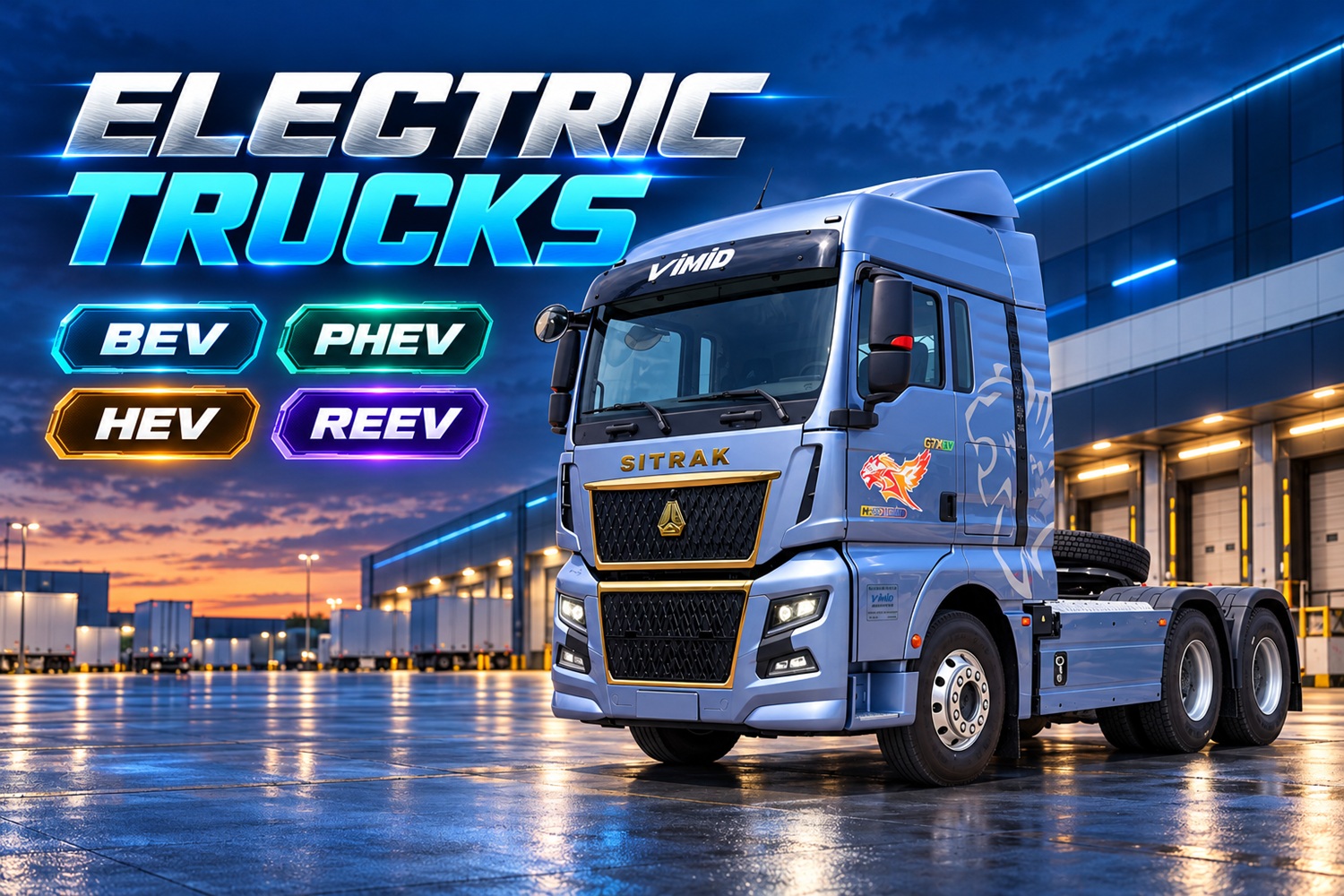
BEV: Battery Electric Vehicle
A BEV (Battery Electric Vehicle) uses electricity stored in its battery to power the traction motor. It has no internal combustion engine in its powertrain and must be charged using an external electricity source. Regenerative braking recovers some energy during deceleration but does not eliminate the need for plug-in charging.
Advantages of BEVs
The most obvious advantage of a BEV is that it does not consume gasoline or diesel to generate traction and produces no tailpipe emissions. Users can replenish its energy at home, at work, or at a vehicle depot, provided suitable charging facilities are available.
BEVs also eliminate maintenance tasks associated with internal combustion engines, such as engine oil changes and exhaust system servicing. However, tires, brakes, cooling systems, and other components still require inspection and maintenance according to the manufacturer’s recommendations.
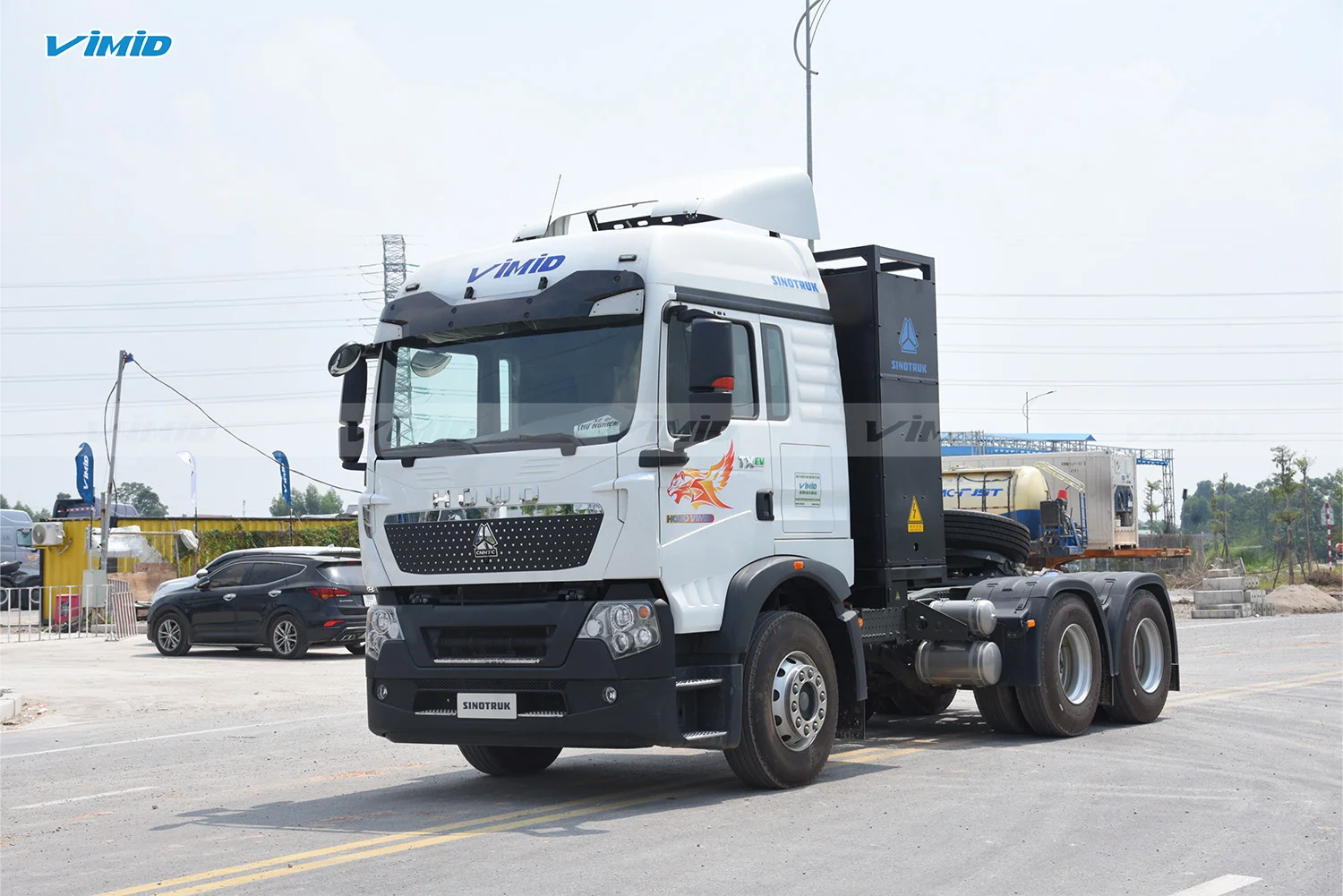 The HOWO TXEV Electric Tractor Truck is a BEV.
Limitations and Suitable Applications
The most important factor to plan for is access to charging facilities. Buyers should identify regular charging locations, vehicle parking times, and contingency plans for unplanned journeys.
For transportation businesses, BEVs may be worth considering for fixed routes, vehicles that return to the depot daily, and operations with sufficient downtime for charging.
PHEV: Plug-in Hybrid Electric Vehicle
A PHEV (Plug-in Hybrid Electric Vehicle) combines an internal combustion engine, an electric motor, and a battery pack that can be charged externally. Depending on the design, the vehicle can operate on electricity for a certain distance before continuing in hybrid mode.
Depending on the powertrain architecture, the internal combustion engine may directly drive the wheels or generate electricity. Certain conditions, such as high power demands or thermal management requirements, may also trigger the engine even when the battery still has charge remaining.
Advantages of PHEVs
PHEVs are worth considering for users who want to drive electrically on everyday trips while retaining flexibility for longer journeys. If the vehicle is charged regularly and daily travel distances fall within its electric driving range, fuel consumption can be reduced.
The ability to continue driving on fuel also reduces dependence on finding charging stations along every route.
Limitations of PHEVs
Efficiency depends heavily on charging habits. If external charging is rarely used, the vehicle cannot fully realize the benefits of its battery and electric driving capability. Because PHEVs still have an internal combustion engine, buyers must also account for related maintenance requirements.
HEV: Hybrid Electric Vehicle
An HEV (Hybrid Electric Vehicle) combines an internal combustion engine with an electric motor but cannot charge its battery from an external power source. Battery energy is replenished through the engine-generator system and regenerative braking.
HEVs come in various configurations. Some vehicles allow the electric motor to drive the wheels independently under certain conditions, while other systems primarily use electric power to assist the engine.
Advantages of HEVs
HEVs are convenient for users who do not have dedicated charging facilities or do not want to schedule charging sessions. Energy is replenished by refueling, while the electric system assists vehicle operation and recovers energy during deceleration.
This is a practical option for buyers who want to adopt electrified vehicle technology with minimal changes to their driving habits.
Limitations of HEVs
HEVs still depend on fuel and are not designed to replace BEVs for extended all-electric driving.
REEV: Range-Extended Electric Vehicle
A REEV (Range-Extended Electric Vehicle) is an electric vehicle equipped with a range extender. In the series-hybrid configuration discussed here, the electric motor directly drives the wheels, while the internal combustion engine operates a generator to supply electricity to the system.
Unlike the interpretation that the engine only charges the battery, electricity generated by the onboard generator can also be used by the powertrain and managed alongside the battery. In this configuration, the engine has no direct mechanical connection to the wheels.
Advantages of REEVs
REEVs combine electric-motor propulsion with the option of replenishing energy using fuel. For models equipped with an external charging port, users can charge the battery for everyday journeys and rely on the range extender when traveling farther. This configuration reduces complete dependence on charging stations, although the electric driving range and operating capabilities of each model must still be evaluated.
Limitations of REEVs
When the generator operates, the vehicle still consumes fuel and produces tailpipe emissions. The vehicle also requires internal combustion engine maintenance, even though the engine does not directly drive the wheels.
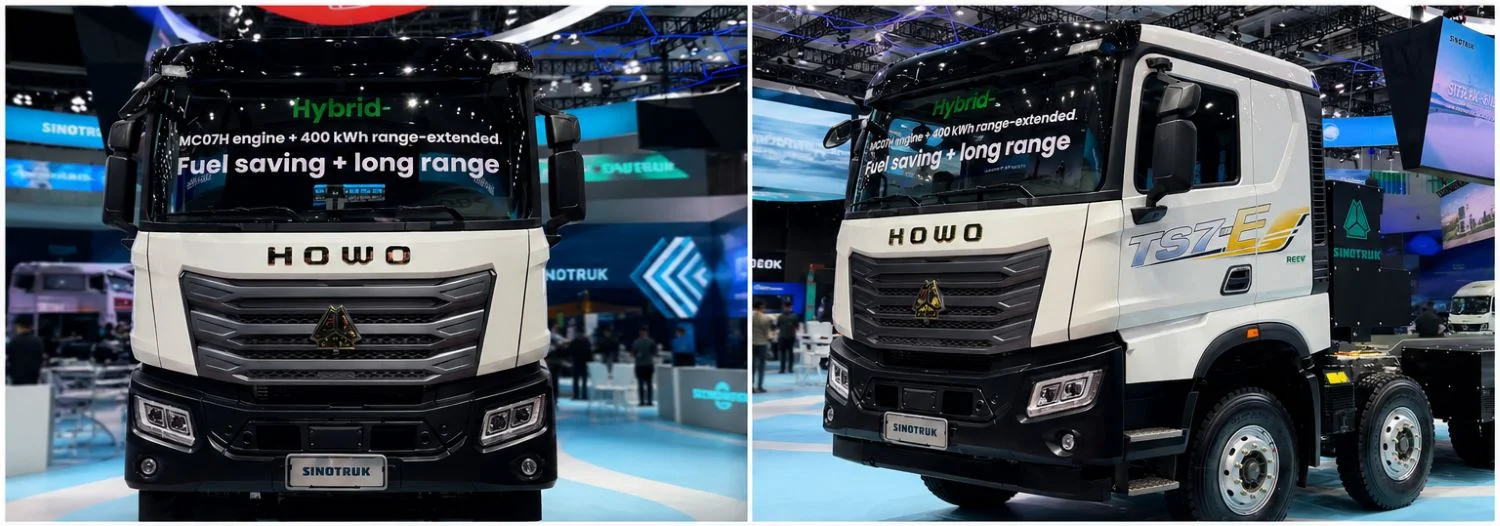
Should You Choose a BEV, PHEV, HEV, or REEV?
Choosing Based on Charging Conditions and Travel Patterns
Charging availability should be considered before comparing battery capacity or total driving range.
| Usage requirements | Options to consider |
|---|---|
| Reliable charging access and routes within the vehicle’s driving range | BEV |
| Frequent charging available, but occasional long trips and limited access to charging stations | PHEV or REEV |
| A transitional option for users without charging infrastructure who want to reduce fuel consumption | HEV |
| Fixed-route fleets that return to the depot after each shift | BEV combined with depot charging |
| Freight operations with variable routes or limited charging infrastructure | Evaluate suitable hybrid or REEV options while checking energy supply and service capabilities |
These recommendations provide an initial screening framework. The final purchasing decision should be based on the specific vehicle model, route conditions, and operational results.
Compare Total Costs Rather Than Purchase Prices Alone
There is no fixed cost ranking that applies to every BEV, PHEV, HEV, and REEV. Buyers should calculate the total cost of ownership (TCO), including the purchase price, electricity, fuel, maintenance, charging equipment, and financing costs over the same ownership period.
If the priority is low TCO and low emissions, a BEV is often a strong option when charging infrastructure can meet operational requirements. If flexibility and independence from plug-in charging are the priorities, an HEV or PHEV may be more suitable. A REEV offers a middle ground between the driving experience of an electric vehicle and the ability to extend its range using fuel.
Check Payload Capacity and Technical Support
For trucks, buyers should assess not only the powertrain but also curb weight, permitted payload or towing capacity, body configuration, and the vehicle’s ability to operate on the intended routes.
Warranty coverage for the battery, high-voltage system support, spare parts availability, and authorized repair facilities should also be clarified. For vehicles with internal combustion engines, buyers should additionally check engine maintenance schedules and fuel system servicing requirements.
Frequently Asked Questions About BEVs, PHEVs, HEVs, and REEVs
Is a REEV the Same as a PHEV?
Not exactly. Both have externally chargeable batteries and internal combustion engines. However, a PHEV may use its engine to drive the wheels directly, whereas a REEV typically uses the engine only as a generator, with the wheels driven exclusively by an electric motor.
Which Vehicle Type Is the Most Fuel-Efficient?
When regular charging is available and daily travel distances fall within the electric driving range, BEVs generally offer the lowest energy and maintenance costs.
When external charging is unavailable, HEVs are often more fuel-efficient than conventional internal combustion vehicles because of regenerative braking and electric motor assistance.
PHEVs deliver their greatest fuel savings when charged regularly. If the battery is frequently depleted, their electric-driving advantages are substantially reduced.
Which Vehicle Type Is Easier to Maintain?
BEVs generally require less routine maintenance because they do not have engine oil, a fuel system, spark plugs, a conventional multi-speed transmission, or many other internal combustion engine components.
HEVs, PHEVs, and REEVs still require maintenance for their internal combustion engines, oil, cooling systems, fuel systems, and exhaust systems. REEV engines may experience less wear if they operate less frequently and under optimized conditions.
Are Electric Vehicles Completely Emission-Free?
PHEVs, HEVs, and REEVs still produce tailpipe emissions whenever their internal combustion engines operate.
Choosing the Right Technology for Your Needs
BEVs are suitable when charging arrangements can accommodate the intended routes; HEVs are convenient for users who do not want to plug in their vehicles; and PHEVs and REEVs offer greater flexibility between electric power and fuel.
For freight transportation, prepare information about routes, payloads, trip frequency, and depot conditions before seeking professional advice.
Contact VIMID at 19001089 to discuss available products and identify a solution suited to your business operations.
Featured news

Related news
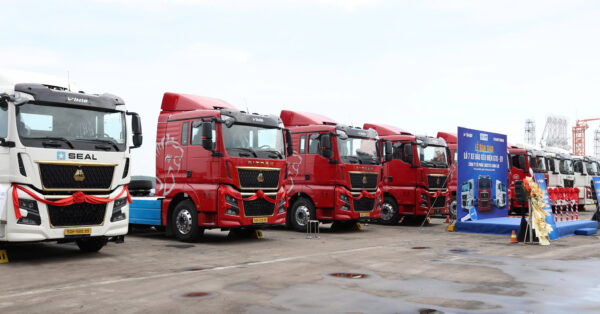
Continuing its partnership in green transportation, Vietnam Machine Investment Development Joint Stock Company (VIMID) recently held a handover ceremony for a new batch of G7X-EV electric tractor trucks to Xuan Loc Logistics Joint Stock Company, marking the second time the company has chosen VIMID’s electric tractor trucks to expand its fleet. More than a testament […]
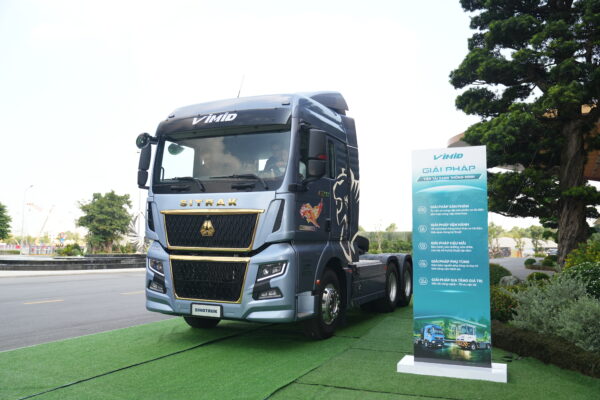
At Young Entrepreneurs’ Gala 2026, organised by the Hanoi Young Business Association (HanoiBA) on 2 October 2026, VIMID made a strong impression with a showcase featuring the G7X-EV electric tractor truck and an integrated ecosystem of smart, green transport solutions. The presence of a heavy-duty electric vehicle already in commercial operation highlighted tangible progress in […]
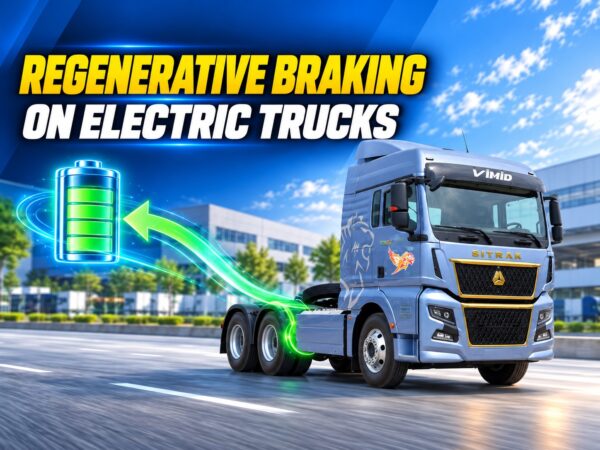
Regenerative braking is one of the key technologies that helps electric vehicles optimize energy efficiency. Instead of allowing all kinetic energy to be converted into heat and lost during deceleration, this system can recover part of that energy and feed it back into the battery. For electric trucks that frequently carry heavy loads, travel on […]